
Friday, 23d—There is so much delay in completing the company that the boys are beginning to think there is no hope of getting our company full. Some of the boys are joining other companies. While waiting, those who wish may leave camp on passes. I got a pass to go home for two or three days.
Tuesday, August 23, 2011
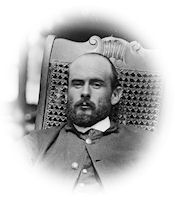
Boston, August 23, 1861
I did n’t get your letter of the 5th until the steamer of the 21st was gone, so I telegraphed to Mr. Motley at Halifax, as I did n’t want to have you come blundering home under the impression that I had been ordered off, and now I will at once answer your letter. If you insist upon coming home and getting a commission, of course you are of age and no one can gainsay you. I don’t favor the idea myself for reasons which I will give you presently; but still if you insist I shall be glad to aid you and will do so. In this war some things are getting clear every day and one is that volunteers won’t do, and another that haste makes waste. If you insist on going, Ritchie advises that you should get a commission in the regular army and go into that. It will be cut down at the end of the war and meanwhile you’ll escape the curse, nuisance and danger of volunteers. If your mind is made up I will apply for you and you can doubtless get your commission and be ready for a winter campaign. Meanwhile you’ll gain nothing but blunders by rushing ahead so like the devil.
So much for that; and now allow me to state some considerations which should prevent your coming home at all. I have three in my mind, and first one relates to myself. I am trying, as well as I may, to do what strikes me as my first duty at home. It is very hard for me to stay here, and no one gives me credit for doing it for any cause save fear; but the truth is the Governor is abroad in the public service, and property was never so difficult of management as it now is. . .. Under these circumstances I concluded very reluctantly I ought to stay at home if I could, and I think you ‘ll agree I was right.
Have n’t I difficulties enough without your piling up new ones? If you insist on this step, I have no election but, at any sacrifice, must go too. The reason is obvious, for while I am single and robust and John remains at home, the world cannot go into these domestic questions, and your coming home in a hurry to get a commission, while I remained in Boston, would be regarded as a most decided implication on my courage. You can’t but see this, and as for your taking a commission under me, it’s bad enough to have a hundred men you don’t care for to look after; but when it comes to looking after a brother and having your attention taken up by what may be occurring to him, it would be intolerable. Besides I expect drafting will have to begin before long and then I have made up my mind to go, and if I go, I think the family in supplying two out of four to the public service does enough, and you ought to stay at home.
In the next place I think decidedly you ought to stay abroad and remain with your father and mother. No one knows what may happen in these days—a foreign war is possible, even an English war — and difficulties you do not now see may any day spring up, and for one I think most decidedly that while times are so troubled our father and mother have got to an age when they ought not to be deserted abroad by all of their children.
Finally, the most weighty consideration to my mind I reserve for the last. Of course you make this a question of usefulness and duty. You are not particularly well fitted for the army and your object, is to be of service to your country. As for distinction and all that sort of thing, when the whole country is rushing into the army it is hardly the place to look for a chance. Where can you be most useful in this emergency? The answer is to my mind too clear to admit of discussion. The rush for commissions is tremendous and you can only get one by shoving somebody equally capable with yourself aside, and you can really do no service, if you get one, which would not be equally well done if you were away. Where you now are you are useful to the whole country and, like a coward, you want to run home because our reverses make the post abroad into which fortune has thrown you very uncomfortable. You fight our battle in England and let us alone to fight it here. There are men enough here, but there your place, if you leave it, must remain empty.
You’ll say, you can’t do anything and have no opening. What could a second lieutenant in an infantry regiment do that would be so immense? Is that a prodigious opening? Go to work at once in England with all your energy and force your way into magazines and periodicals there and in America, so that you can make yourself heard. For there is going to be difficulty about this blockade and much bad feeling, though, God grant, no blows. For heaven’s sake try to influence that and don’t throw yourself away by rushing into this mob of bruisers. Try to raise people up a little. Look into the cotton supply question and try to persuade the English that our blockade is their interest. If they raise it and transfer it to our coasts, they have the power to do so, but they ally themselves with slavery — give it the victory, give the lie to their own protestations and secure to the South for years with the advantage of their system of labor and production that monopoly of cotton under which England groans. If the blockade lasts and forces supply, England will purchase, at the price of one year’s suffering, freedom and plenty for ever. Touch England through her pocket and help your country that way.
Then write to the Atlantic of the way fighting America appears in English eyes, of her boasting and bragging, her running and terror; tell us of the pain she causes her children abroad and how foolish her angry threats sound, and help your country that way. Here is your field, right before your nose, in which you could be of real service, and you want to rush away to do what neither education nor nature fitted you for — what others could do as well or better, and get your head knocked off without doing the least good. If you have any energy use it where you are and where it can be of value. If you have n’t any keep out of the army. Talk of backing the Governor up in the Times in these days! We’ve got beyond all that, I hope. For God’s sake take a broader view and make yourself heard where a voice is wanted. Don’t talk of your connection with the legation to me; cut yourself off if necessary from it and live in London as the avowed Times correspondent and force your way into notice of the London press that way. Wake up and look about you and make yourself useful and don’t jog on in this cart horse way, or brag over your harness and wish yourself a blood-horse, with McClellan, instead of a jackass who can’t break his traces. There, I have blown my blast and have done, and you can do as you see fit. Free from the legation you could earn a living by your pen in London and be independent, busy, happy and eminently useful. If you come home you won’t be of the slightest use to any one, and you will have deserted your post. Now if you want a commission let me know and I’ll do my best for you; but have nothing to say to Horace Sargent. He is n’t the man and I know him.’
We’ve had a bad panic, but it seems to be over now and I think they were wise in refusing the battle.
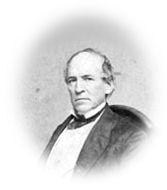
FRIDAY, AUGUST 23, 1861.
A fine bright day. Went to the Presidents at 1/2 past 8. Many members of the Cabinet there to see him and officers of the Army. I was not able to see him in private. Genl McClellan was there and Col Baker and Col Duryee and Genl J.W. Denver and other distinguished characters. Rcd letter from C R Taft today. Called at Willards, officers plenty there. N P Willis there and Doct Russell, the corrispondant of the “London Times.” Went down to see the dress Parade of the “Regulars” with Julia and Chas and Sallie.

______
The three diary manuscript volumes, Washington during the Civil War: The Diary of Horatio Nelson Taft, 1861-1865, are available online at The Library of Congress.
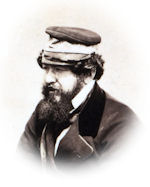
August 23rd.—The torrent is swollen to-day by anonymous letters threatening me with bowie knife and revolver, or simply abusive, frantic with hate, and full of obscure warnings. Some bear the Washington post-mark, others came from New York, the greater number—for I have had nine—are from Philadelphia. Perhaps they may come from the members of that “gallant” 4th Pennsylvania Regiment.
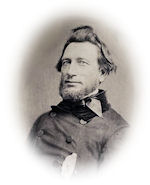
23d.—Colonel _______ to-day complains that I have too much force employed in the hospital, and says that he will cut it down. The regulations allow ten nurses and two cooks to the regiment, besides Surgeons, and Hospital Steward. All I have, are three nurses and two cooks. Will he dare to cut that down? Should he do so I will “try conclusions” as to his authority to do it. Three nurses, for one hundred sick, and that must be cut down! Nor is this all. The Quartermaster, taking his cue from the Colonel, refuses to acknowledge our right to a hospital fund, and I therefore get but few comforts for the sick, except through charity or a fight for it. It is to be hoped that these officers will, by a little more experience, become better posted in their duties, and that the sick will not then be considered interlopers, or intruders on the comforts of the regiment. I forgot to say, in the proper place, that we are brigaded, forming a part of Gen. Rufus King’s brigade, composed of four regiments.
I have not yet donned the full uniform of my rank, and there is scarcely a day passes that I do not get a reproving hint on the subject from our Colonel. A few days ago, whilst in Baltimore, he came to me almost railing at certain army officers for appearing in citizens’ dress. “There,” said he, “is Major B., Major K., Gen. D., Doct. N. P., all of the regular army, and not one of whom can be distinguished from a private citizen.” “Colonel,” I replied, “they probably fear being mistaken for volunteer officers. He did not feel flattered, but dropped the subject. Since I came here, I think I can tell a man’s calibre by his shoulder-straps. The amount of brain is generally in inverse proportion to the size of his straps.
Friday 23.—Clear, bright day; mud and water in the road but a bracing air and blue sky overhead. Men marched with spirit. Lovely mountain views and clear mountain streams always in sight. Camped on the mountainside in the road; no tents pitched. Colonel and Dr. Joe slept in ambulance. I fixed up our cots under the blue canopy, near a roaring mountain stream, and with Adjutant Fisher watched the bright star near the Great Bear, perhaps one of that constellation, which I conjectured was Arcturus, until the moon came in sight. Slept in snatches and was refreshed.
August 23d.—A brother of Doctor Garnett has come fresh and straight from Cambridge, Mass., and says (or is said to have said, with all the difference there is between the two), that “recruiting up there is dead.” He came by Cincinnati and Pittsburg and says all the way through it was so sad, mournful, and quiet it looked like Sunday.
I asked Mr. Brewster if it were true Senator Toombs had turned brigadier. “Yes, soldiering is in the air. Every one will have a touch of it. Toombs could not stay in the Cabinet.” “Why?” “Incompatibility of temper. He rides too high a horse; that is, for so despotic a person as Jeff Davis. I have tried to find out the sore, but I can’t. Mr. Toombs has been out with them all for months.” Dissension will break out. Everything does, but it takes a little time. There is a perfect magazine of discord and discontent in that Cabinet; only wants a hand to apply the torch, and up they go. Toombs says old Memminger has his back up as high as any.
Oh, such a day! Since I wrote this morning, I have been with Mrs. Randolph to all the hospitals. I can never again shut out of view the sights I saw there of human misery. I sit thinking, shut my eyes, and see it all; thinking, yes, and there is enough to think about now, God knows. Gilland’s was the worst, with long rows of ill men on cots, ill of typhoid fever, of every human ailment; on dinner-tables for eating and drinking, wounds being dressed; all the horrors to be taken in at one glance.
Then we went to the St. Charles. Horrors upon horrors again; want of organization, long rows of dead and dying; awful sights. A boy from home had sent for me. He was dying in a cot, ill of fever. Next him a man died in convulsions as we stood there. I was making arrangements with a nurse, hiring him to take care of this lad; but I do not remember any more, for I fainted. Next that I knew of, the doctor and Mrs. Randolph were having me, a limp rag, put into a carriage at the door of the hospital. Fresh air, I dare say, brought me to. As we drove home the doctor came along with us, I was so upset. He said: “Look at that Georgia regiment marching there; look at their servants on the sidewalk. I have been counting them, making an estimate. There is $16,000—sixteen thousand dollars’ worth of negro property which can go off on its own legs to the Yankees whenever it pleases.”

AUGUST 23D—No arms yet of any amount from Europe; though our agent writes that he has a number of manufactories at work. The U. S. agent has engaged the rest. All the world seems to be in the market buying arms. Mr. Dayton, U. S. Minister in Paris, has bought 30,000 flint-locks in France; and our agent wants authority to buy some too. He says the French statisticians allege that no greater mortality in battle occurs from the use of the percussion and the rifled musket than from the old smooth-bore flint-lock musket. This may be owing to the fact that a shorter range is sought with the latter.

August 23.—The Second Fire Zouaves, N. T. S. V., under the command of Colonel James Fairman, left New York for the seat of war. The regiment numbers over seven hundred men, most of whom are well-tried firemen.—N. Y. Herald, August 24.
—A band of secessionists, calling themselves “The Coast Guard,” and commanded by Captain Arnow, from St. Augustine, arrived at Key Biscayne, coast of Florida, at two o’clock this morning, in a boat from the mainland, and at once took possession of the light-house, the dwelling, and all the Government property, and imprisoned the keeper. They then went up into the tower, and destroyed the lens, (and a valuable second order Fresnel illuminating apparatus,) and injured the machinery so badly that it cannot be used again. They reported that Jupiter Light was put out by them on the 20th, and Cape Canaveral some days previous. The party left Key Biscayne after a short stay, proceeding toward Miami in their own boat, and taking a boat belonging to the light-house department.—Simon Frow, in the National Intelligencer, September 9.
—At West Chester, Pa., Deputy United States Marshal Jenkins S. Schuyler, by order of the United States Marshal, took possession of the Jeffersonian newspaper building, with its contents, this afternoon, to await further orders from Washington.—N. T. Times, August 24.
—The Seventeenth and Twenty-first regiments of Massachusetts Volunteers, under the command of Lieutenant-Colonel John J. Fellows and Colonel Augustus Morse, departed for the seat of war.—Idem.
—The State Department at Washington issued the following explanatory notice:
“The regulation of this department of the 19th inst., on the subject of passports, was principally intended to check the communication of disloyal persons with Europe. Consequently passports will not be required by ordinary travellers on the lines of railroads from the United States which enter the British possessions. If, however, in any special case, the transit of a person should be objected to by the agent of this Government on the border, the agent will cause such person to be detained until communication can be had with this department in regard to the case.”
—The Seventh regiment of Maine Volunteers, under the command of Colonel E. C. Mason, U. S. A., left Augusta, Me., for the seat of war. There are in the regiment about eight hundred men. They were hastily organized, and therefore have had but little drill. The organization was made at Augusta, where Company A first went into encampment five weeks ago; some of the other companies were in camp only four or five days. The men are nearly all lumbermen, raftsmen, and farmers, mostly from along the Kennebec and Penobscot rivers. The largest company (A) have ninety men, who, with the exception of a few blacksmiths, are all lumbermen. This company, and Company K, did not have a man rejected at the inspection, nor did one refuse to take the oath of enlistment. The other companies lost each from two to five men in going through these forms.
The regiment have camp equipage complete. Their uniform is light blue pantaloons, dark blue blouses, and the dark blue U. S. regulation infantry caps. They are armed with Windsor rifles and sabre bayonets.
Colonel Mason is yet a regular army officer, holding a captaincy in the Seventeenth U. S. Infantry.—N. Y. Express, August 24.
—The schooner Sarah Ann, Rome, recently purchased by John Douglas Mirridless, of Wilmington, N. C., and registered with the British consul as the William Arthur, of Liverpool, loaded with fish, beef, pork, etc., cleared from Portland, Me., for St. Thomas, and sailed today—but information having been received that her destination was Wilmington, N. C., she was seized down the harbor by the collector of the port and surrendered to the United States marshal under the authority of the act of August 6, confiscating property intended for insurrectionary purposes.—N. Y. World, August 24.
—Isham G. Harris, governor of Tennessee, issued an appeal to the mothers, wives, and daughters of that State, for contributions of clothing, blankets, and other articles “which will contribute to the relief, comfort, and health of the soldier in the field.”—(Doc. 3.)
—There was a great mass meeting in Camden, Me., in favor of a vigorous prosecution of the war. Dr. J. H. Esterbrook presided. Speeches were made by Major Nickerson, of the Fourth regiment, Hon. E. K. Smart, A. P. Gould and D. A. Boody, democrats; and by N. A. Farewell, General Davis Tillson, T. R. Simonton and C. A. Miller, republicans. About three thousand people were in attendance. Great enthusiasm prevailed.—N. Y. Evening Post, August 24.
—The First regiment of Iowa Militia returned to Dubuque from the seat of war in Missouri. The troops were received by thousands, who “turned out to greet them and shout hozannas on their return.” This regiment was one of those who did the hardest fighting in the battle of Wilson’s Creek, Mo.; they were the troops whom General Lyon rallied to the charge with his latest breath.—Dubuque Times, August 24.


