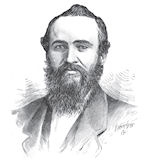
Friday, 2d.—The two companies marched on through New Middleton, crossed the Caney Fork River at Trousdale’s Ferry, and camped on the east bank of that stream.
Tuesday, August 2, 2011
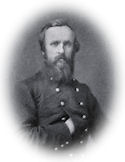
WESTON, August 1, 1861.
DEAREST:—Do you remember a year ago today we were riding on the Grand Trunk Railroad from Detroit by Sarnia eastwardly? Jolly times those. If you were here, these would be as pleasant. The water in the river below our camp flows past you in the Ohio; in these low water days, about a month after they leave here.
We are now in telegraphic communication with the world. Dr. Joe receives dispatches about medicines and Colonel Scammon about military matters from Columbus and Cincinnati. We had the two county court clerks before the colonel taking the oath of allegiance to the United States and to the new Government of Virginia. They squirmed a little, but were required to do it or go to Camp Chase.
Colonel Matthews left this noon with five companies—right wing—for Sutton, a place forty-four miles south of this place. We suspect that Wise has left western Virginia. If so, our campaigning here is likely to be pacific and uninteresting.
August 2.—I have been out to report myself at reveille, and not feeling like resuming my nap, am seated on my trunk jotting down these lines to my darling. Colonel Jewett arrived last night from Zanesville. He finds his boy doing well. It is still very uncertain what is to be the result. It is probable that no amputation will be necessary, and there is hope that he may not be more than very slightly crippled, He will be unable to use his foot, however, for perhaps months.
Our news is that Wise has continued his retreat burning the bridges after him. This confirms our suspicions as to his abandoning all west of the mountains. There is, however, a report from the East that General Lee is to be sent out here to look after General Rosecrans, with a considerable force. I do not believe it, but if so, we shall have lively times. Colonel Ammen with the Twenty-fourth is reported in our neighborhood. We shall be glad to be with them again.
Puds, here it is Saturday, the 3d, and my foolishness isn’t off yet and won’t be until Monday. It is so hot and pleasant. I am so lazy and good-natured. Joe says, “I wish Webb was here”; I say, I wish you were all here. We may be ordered to move any hour, and it may be [we] shall be here a week hence. We have got our camp into good order—clean and pretty. Joe was pretty sick last night, but is under a nice shade today, as lazy and comfortable as possible. The effect is curious of this fine mountain air. Everybody complains of heat, but everybody is in a laughing humor. No grumbling reaches me today.
I have called on divers leading lawyers and politicians, generally Union men, and find them agreeable people. The courthouse here is a good one and is used as a hospital for all these regiments. About one hundred sick are there. When Joe gets perfectly well, which I advise him not to do, he will have charge of all of them. We have four or six there.
Very affectionately, your
R.
“Love me?” I have heard nothing from Ohio except an occasional newspaper. Write about Uncle and everybody. Our men sing beautifully tonight.
MRS. HAYES.
_______
Diary
August 2, 1861.—A. M. fired pistol with Captain Zimmerman and P. M. Enfield rifle with Captain Sperry. My pistol shooting rather poor. Rifle shooting at one hundred yards good, at three hundred yards, tolerable. Weather hot. In the evening passed the sentinels to try them, back and forth several times. Found them generally defective; they took instruction kindly and I hope they may do well yet.
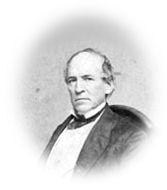
FRIDAY, AUGUST 2, 1861.
The weather is hot now adays, the M. ranging about 90. I have been at the office part of the day writing letters &c at my old table. Doct King has been packing up his books. I have been cleaning out my drawers and throwing away unimportant papers and letters. Chas heard from Fort Leavinworth today. He wrote to one of the officers enquiring for Frank. He is with Genl Lyons Command near Springfield M.O. Wa[l]ked with wife up to Col Smalls camp, called on our return upon Mr & Miss Reynolds.

______
The three diary manuscript volumes, Washington during the Civil War: The Diary of Horatio Nelson Taft, 1861-1865, are available online at The Library of Congress.
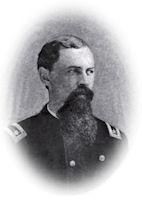
Cairo, August 2, 1861.
Hot! You don’t know what that word means. I feel that I have always been ignorant of its true meaning till this week, but am posted now, sure. The (supposed-to-be) “never failing cool, delicious breeze” that I have talked about so much, seems to be at “parade rest” now and—I can’t do justice to the subject. The health of the camp is much better now than at any time before, since we have been here. There is not a sick man in our company. My health remains gorgeous. We drill now five hours a day, under a sun that cooks eggs in 13 minutes, but we think we feel the heat no more walking than lying around the quarters.
The seceshers this morning took the packet that has been plying between here and Columbus, and have run her off down to Memphis. I thought that Prentiss stopped her sometime since, but this at last closes all communication between the North and South at this point. Our “ossifers” we think are really scared about an attack here, but you could not make the soldiers believe in the like till they see the fight begin. About a thousand of our men were rushed off to Bird’s Point to-day to work on intrenchments, and won’t they sweat?
My chum heard Colonel Oglesby tell an officer two hours ago that there were 17,000 Rebels within 15 miles of the Point. The scouts reported this body at New Madrid, 40 mile’s down the Mississippi, two days since. Yesterday 12 men from the Pekin company and 12 from our’s with some artillerymen went 30 miles up the Mississippi to collect all the boats we could find on the Missouri shore. We found three large flats tied up to trees along the shore which we confiscated. One of them wasn’t very good so we sunk it. The object was to prevent marauders from visiting Illinois. I had charge of the men from our company.
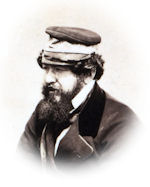
August 2nd.—Mr. Olmsted visited me, in company with a young gentleman named Ritchie, son-in-law of James Wadsworth, who has been serving as honorary aide-de-camp on M’Dowell’s staff, but is now called to higher functions. They dined at my lodgings, and we talked over Bull Bun again. Mr. Ritchie did not leave Centreville till late in the evening, and slept at Fairfax Court House, where he remained till 8.30 a.m. on the morning of July 22nd, Wadsworth not stirring for two hours later. He said the panic was “horrible, disgusting, sickening,” and spoke in the harshest terms of the officers, to whom he applied a variety of epithets. Prince Napoleon has arrived.
AUGUST 2D.—After some brilliant and successful fights, we have a dispatch to-day stating that Gen. Wise has fallen back in Western Virginia, obeying peremptory orders.
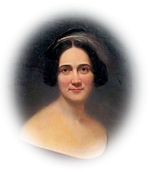
August 2d.—Prince Jerome¹ has gone to Washington. Now the Yankees so far are as little trained as we are; raw troops are they as yet. Suppose France takes the other side and we have to meet disciplined and armed men, soldiers who understand war, Frenchmen, with all the élan we boast of.
Ransom Calhoun, Willie Preston, and Doctor Nott’s boys are here. These foolish, rash, hare-brained Southern lads have been within an ace of a fight with a Maryland company for their camping grounds. It is much too Irish to be so ready to fight anybody, friend or foe. Men are thrilling with fiery ardor. The red-hot Southern martial spirit is in the air. These young men, however, were all educated abroad. And it is French or German ideas that they are filled with. The Marylanders were as rash and reckless as the others, and had their coat-tails ready for anybody to tread on, Donnybrook Fair fashion. One would think there were Yankees enough and to spare for any killing to be done. It began about picketing their horses. But these quarrelsome young soldiers have lovely manners. They are so sweet-tempered when seen here among us at the Arlington.

______
¹ Jerome Napoleon Bonaparte, a grandson of Napoleon Bonaparte’s brother Jerome and of Elizabeth Patterson of Baltimore. He was a graduate of West Point, but had entered the French Army, where he saw service in the Crimea, Algiers, and Italy, taking part in the battle of Balaklava, the siege of Sebastopol, and the battle of Solferino. He died in Massachusetts in 1893.

August 2.—Up to this date Indiana has equipped and sent into the field thirteen regiments of infantry and two companies of cavalry. Two additional regiments of infantry are now ready to march, and an entire regiment of cavalry will be ready in a short time. Seventeen additional regiments of infantry are now forming, and will be put into the service as speedily as possible. This will make thirty-three regiments raised and to bb raised in Indiana—a force of about 86,000 men, including three artillery companies now about ready for active service. This is over 3,000 men for each Congressional District, or about every fortieth person in the State.—Indianapolis Journal, August 3.
—The United States steamer Albatross, Captain Prentiss, arrived at Philadelphia, Pa., from Hampton Roads, having in charge the schooner Enchantress, which was captured July 6th, 260 miles southeast of Sandy Hook, by the privateer Jeff. Davis, and on attempting to take her into the port of Charleston, S. C., on the 22d of July, was re-captured with five men of the privateer’s crew on board, west of Cape Hatteras. The Enchantress cleared from Boston on the 29th of June, for ports in Cuba. All the crew except Garrick (negro cook) were removed to the Jeff. Davis, and a crew from the privateer, consisting of W. W. Smith, of Savannah, Ga.; Ebin Lane, of West Cambridge, Mass.; Thomas Qnigley, of New York; Daniel Mailings, of Charleston, S. C.; and E. Rochford, of Liverpool—put on board to take her to Charleston, the negro Garrick being retained as cook. After the schooner had left the Jeff. Davis, Garrick meditated getting possession of the Enchantress, but delayed the execution of his plan, so as to sound the views of a portion of the crew. Before coming to any definite conclusion the steamer Albatross hove in sight, and as soon as the crew on board the Enchantress discovered the character of the steamer they “fought shy.” When the Albatross approached and the Enchantress was hailed, a reply came that “the schooner was from Newburyport, and bound to Santa Cruz.” Just at that moment the negro Garrick appeared on the gunwale of the schooner and jumped overboard, at the same time crying out, “For God’s sake, save me, Captain; she’s a Secesher, bound to Charleston.” A boat was immediately lowered from the Albatross, and, after picking up the negro, boarded the schooner. On examining her papers they were found to be the same that had been issued in Boston, and the crew had agreed to represent themselves as the original crew of the Enchantress, but the officers of the Albatross having seen the account of her capture in the papers, and also having the story of the negro to confute their statements, they were placed on board the Albatross and ironed, in which condition they were brought into port and turned over to the United States authorities. The Enchantress has a cargo of first, class assorted goods, suitable for the army.— Philadelphia Ledger.
—General Fremont and staff and a fleet of eight steamers, four regiments of infantry, several detached companies of infantry, and two companies of light artillery, arrived at Cairo, Ill., this afternoon. They were enthusiastically received. The troops were landed at Bird’s Point.—Boston Transcript, August 3.
—In the House of Representatives at Washington, a joint resolution was adopted thanking the soldiers of the republic for their loyalty and devotion, and declaring that while the National Legislature expresses the sympathy of the nation for the bereaved families and friends of the fallen, they commend to a generous people and to the army, which is now eager to renew the contest with unyielding courage, the imperishable honor of their example.
—General Lyon, with all the infantry, cavalry, and artillery of his command, came up with part of the rebel force under McCullough at Dug Spring, nineteen miles south-west of Springfield, Missouri; at 4 P. M., Lyon opened upon the enemy with artillery, and elicited but feeble response. A detachment of his cavalry, twenty-seven in number, came suddenly upon a regiment of rebel infantry, charged and broke it, and returned safely to their position. The artillery fire continued till night, when the enemy withdrew. The national infantry was not engaged. Forty rebels were found dead upon the field and forty-four wounded. Lyon’s loss was nine killed and thirty wounded.—(Doc. 154.)
—The Congress of the United States passed the Tariff and Direct Tax Bill, providing for a direct tax of twenty millions of dollars.—N. Y. Herald, August 3.
—Four companies of the Second Ohio Volunteers arrived at Cincinnati this morning from Washington. The reception was the grandest demonstration ever witnessed in Cincinnati. The Home Guards of Covington and Newport, Ky., and the reserve militia and independent regiments of Cincinnati, were out in large force, and escorted the volunteers through some of the principal streets to the Eighth-street Park, where they were welcomed home by Judge Storer in an eloquent address. They afterward partook of a banquet in the Park, provided by the citizens. All along the line of march the streets were densely crowded, and the enthusiasm unbounded. The volunteers were completely covered with the bouquets and wreaths showered upon them. The city was gaily decorated with flags, and business was entirely suspended.—N. Y. Tribune, Aug. 8.
—General B. F. Butler, at Fortress Monroe, Va., issued a general order forbidding the sale of intoxicating liquors to the soldiers in his department.—(Doc. 155.)
—The Fifth Regiment of New York Militia, under the command of Colonel Schwarzwaelder, returned home this morning, and were escorted to their head-quarters by the Eleventh Regiment, the Fourth Artillery, and several German societies.—The service on which the Fifth has been employed was guard, picket, and scout duty, at the Relay House, Md. Their vigilance frequently prevented serious results to the body of troops stationed at that post. The railroad was also an object of the special vigilance of the Fifth, and the prevention of attempts to place obstacles on the track, was one way in which their services were valuable.—N. Y. Commercial, August 2.
—The Mobile Register of to-day, referring to a despatch to the effect that forty votes were given in Congress to Mr. Cox’s peace proposition, says:—”We know that there is a peace party already numbering among its representatives, nearly one-third of the United States House of Representatives. This is a direct result of the triumph of Manassas. We have converted near one-third of the United States House of Representatives from the error of their warlike ways by the powerful display of our ability to conquer a peace. We first asked peace. It was refused. Now we will conquer it. We have conquered one-third of it already. Another great victory like, or even less than that of Manassas, and we shall conquer another third—the two-thirds including all the commonsense men of the North, who will be brought to conversion: and the outside third, the radical abolition fanatics, will alone remain, the despised minority of their countrymen, who will role them out of voice in the Government. Let us wait, and hope, and—fight, as if we had still three-thirds to conquer.”
—The following, in large letters on a handbill, was conspicuously posted at several places in New York city this morning. Crowds of people were attracted to read it:
“The people awake! Enemies at home wearing the mask of peace (masks of the golden cross) as well as open foes, must be struck down. Be not deceived! The freedom of the press is subordinate to the interests of a nation. Let the three Southern organs issued in this city beware, or editors will be assigned to them to preserve the public welfare. From this date the authority of the people organizes a new system of legislation suited to the times. Politicians will not be permitted to injure the general cause in pursuit of ambitious ends. The rights of our soldiers will be protected. Disappointed demagogues will be forbidden to aggrandize themselves at their expense. The District-Attorney is expected to exercise his power. Traitors, male and female, are marked. Their names enrolled. Not one shall escape. Southern sympathizers are directed to leave the state. One will! One way! One country! We have begun to act. From the league of loyalty,
The People.
GOD SAVE THB REPUBLIC.
—The House of Representatives, at Washington, to-day recommitted the Confiscation bill. Mr. Crittenden made a speech upon it, protesting on constitutional grounds, and for reasons of policy, against the confiscation and consequent emancipation of slaves. He, however, pronounced boldly for the war, for the Union, sustaining the President, and, in the name of the great interests at stake, demanding that the utmost aid be given him.—N. Y. Tribune, August 8.
—The Twentieth Regiment, Ulster Guard, N. Y. S. M., Colonel G. W. Pratt, returned to Rondout this morning, their term of service having expired. They were received at the landing by the military, firemen, and a very large number of citizens of Rondont and Kingston. The regiment was mustered out of the service soon after the arrival.—N. Y. Evening Post, August 3.


