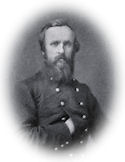
August 16. Friday.—A morning of small excitements. A wagon train stopped on its way towards Sutton to search for arms or ammunition concealed in boxes of provisions. . . . Drake, Captain, and Woodward search train in vain for contraband.
August 2011
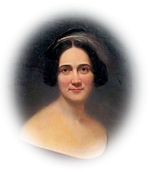
August 16th.—Mr. Barnwell says, Fame is an article usually home made; you must create your own puffs or superintend their manufacture. And you must see that the newspapers print your own military reports. No one else will give you half the credit you take to yourself. No one will look after your fine name before the world with the loving interest and faith you have yourself.
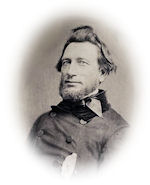
16th-—I am still at Barnum’s, and having transferred my sick to the charge of Mr. S., I have a little more time to think, and to journalize my thoughts. I have looked around a little to-day, and my observations have almost made me wish I had no country. When every right which freemen hold dear is at stake, to see men calculating the pecuniary cost of preserving them, sickens the heart, and shakes our confidence in human nature. When the poorer classes are laboring day and night, and exposing their lives in the cause of that government on which the rich lean for protection in the possession of their wealth, to see these loud mouthed patriotic capitalists’ cheating them in the very clothes they wear to battle, the soul revolts at the idea of human nature civilized into a great mass of money-makers. May we not expect, ere long, that these same patriots will be found opposing the war because it will require a tax on the riches which they shall have amassed from it, to defray its expenses ? We shall see.
There must be great imbecility too, somewhere, in the management of our affairs. We are 20,000,000 of people fighting against 6,000,000.[1] We boast that we are united as one man, whilst our enemies are divided. Congress has voted men and money ad libitum. We boast of our hundreds of thousands of soldiers in the field, whilst the rebel army is far inferior. Yet Sumter yielded to the superiority of numbers. Pickens dares not venture out of her gates, on account of the hosts surrounding her. At Big Bethel we fought against great odds in numbers. At Martinsburg we were as one to three. At Bull Run the united forces of Beauregard and Johnston bore down on and almost annihilated our little force; whilst even in the west we see the brave Lyon sacrificed, and Sigel retreating before superior numbers. And yet we seem insecure even in the defences of our great cities. We are in daily apprehension of an attack on Washington. Baltimore is without an army. St. Louis is in danger, and even Cairo defended by a handful of men compared to the number threatening to attack her. Surely the god of battles cannot have made himself familiar to our leaders.
[1] I assume that the slave population are not of those against whom we fight.

August 16.—Colonel Hecker, with his regiment, surprised a body of rebels-, four hundred strong, near Fredericktown, Mo., early this morning. He captured all their camp equipage, and his men ate the breakfast which had just been prepared by the rebels. Twelve prisoners were also taken.—General Prentiss took command of all the forces at Ironton, Mo.—N. Y. World, August 20.
—A New battery, erected by the rebels at a point a mile or two below Aquia Creek, Va., opened fire on the steamer Pocahontas, but inflicted no damage. This is the fourth battery which has been erected at that point. Officers report that, unless the Government takes immediate action to expel the rebels from these positions on the bank of the river, navigation will be completely closed. The enemy’s batteries already command a large part of the Potomac.—Louisville Journal, August 19.
—In the United States Circuit Court, sitting in the city of New York, the Grand Jury brought in a presentment against the Journal of Commerce, Daily News, Day Book, Freeman’s Journal, and Brooklyn Eagle, as aiders and abettors of treason, and recommended that the Court, in its judicial capacity, take cognizance of them. The Judge said he would turn over the presentment to Judge Wilson, at the October term.—(Doc. 189.)
—A Serious affray occurred at Saybrook, Conn., this afternoon. A number of prominent secessionists of the State had called a “peace meeting,” to commence at three o’clock, when a peace, or secession flag was to be raised, and several speeches were to be made. Among the speakers who were announced, and on hand, was W. W. Eaton, of Hartford. The fact becoming known in New Haven, about ninety residents of that city came up on the train this morning. On reaching Saybrook the New Haven boys marched in procession to the flag-staff, upon which it was rumored that a secession flag was to be raised, surrounded it, and immediately proceeded to hoist the Stars and Stripes, when Judge Colyer of Hartford, and a noted secessionist of Saybrook, with others, undertook to prevent the Stars and Stripes from being raised, and cut the halyards, and it is said also made an attempt to use the knife upon some of the New Haven boys, when a desperate affray commenced between the secessionists and Unionists, which resulted in Judge Colyer having one of his cheeks dreadfully cut, and the great peace advocate of Saybrook faring little better. Mr. Eaton was deterred from making his prepared speech; and quiet being restored, Capt. Joseph R. Hawley, of the returned First Regiment, whoso bravery at Bull Run has been frequently alluded to, made a capital Union speech, which was enthusiastically received by the assemblage. About forty of the New Haven boys returned home this evening, while fifty remained to watch movements for the night, and probably take care of the flag-staff so that no secession flag should be raised upon it. The flag which the secessionists intended to hoist was a white one with the word “Peace” inscribed thereon.— N. Y. World, August 17.
—The President declared by proclamation that, as their rebellious populations had failed to disperse and return to their duty as bidden in his proclamation of Feb. 28, the States of South Carolina, North Carolina, Georgia, Alabama, Florida, Mississippi, Louisiana, Texas, Virginia, Tennessee, and Arkansas were in a state of insurrection, and that all commercial intercourse with them “is unlawful, and will remain unlawful until such insurrection shall cease, or has been suppressed.”—(Doc. 190.)
—Fifty-eight Thousand Dollars were seized by U. S. troops at Genevieve, Missouri, and taken to St. Louis.—N. Y. Herald, August 18.
—All safe-conducts, passes, etc., hitherto granted to enter or go beyond the U. S. army lines in Virginia, were revoked by general order.—Army Order, No. 4.
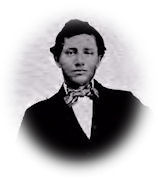
Thursday, 15th—We capped our grain stacks against rain and windstorms, and then commenced mowing wild grass for hay. This is my birthday; am nineteen years old.
15th.—I wish to record, what I have omitted, an acknowledgment to many of the people of Baltimore during our stay here, for such kindness as I never expected to meet with amongst strangers. On the morning of our arrival, at the depot, in this city, I was detained some time in looking after the sick who were brought forward, and in getting them into conveyances to the depot where we were to re-embark. The regiment marched forward and left me, so that I must pass through the city alone. I armed myself well, expecting to be insulted at every corner, and, perhaps, to meet with personal violence. My dress showed me to be a member of the regiment which had just passed. Scarcely a rod did I walk without being accosted with kind greetings and “Godspeeds;” scarcely a corner did I pass without being stopped by gentlemen, inviting me to their houses to partake of their hospitality, in the shape of a cup of coffee, a breakfast, a little rest. Ladies, as I passed, would come to the door, or send out their servants to know if they could do anything for the comfort of myself or regiment.
Since I have been left here with the sick of the regiment, their kindness and attention have, if possible, been even more marked. The house which I use for both hospital and headquarters, is constantly crowded by ladies, gentlemen, children, pressing in to see what they can do for the relief of the sufferers. The tables groan under the delicacies brought in, and citizens beg for permission to take my sick and care for them at their houses. Nor is this done from the novelty of seeing a regiment pass through. There are always from ten to twenty thousand volunteer troops here, and from one to twenty new regiments pass through daily.
I confess to myself that this is a discouraging feature in the war. This is a Southern city, and this is a type of Southern character. They become interested, and their whole heart is wrapped up in the subject. It is a representation of the character of the people against whom we fight, and on this earnestness for what they believe to be right, is based much of their opinion that the Southerner will prove himself so far superior to the Northern man in battle. I fear there is more truth in it than we of the North are willing to admit. Whatever may be the result of the struggle now going on, to the people of Baltimore I shall ever remember that I am under deep obligations for their kindness to me personally, as well as to the sufferers under my care, and for their interest in the cause which I believe to be not only right, but sacred. I leave Baltimore with much regret, and beg its kind citizens to remember that at least one soldier, a recipient of their kindness, will ever treasure in his heart a grateful remembrance of them.
THURSDAY 15
The 3rd Regt of Regulars are cleaning up the Camp on F[ranklin] Square, “Camp Anderson,” for occupation. I was in the Pat office awhile today but staid at Home most of the day. The weather is quite cool and a fire in the dining room is comfortable in the morning. Doct Barnes was over from Alexandria and took dinner with us. No particular news afloat. All military movements are now kept as secret as possible by Genl McClellan.

______
The three diary manuscript volumes, Washington during the Civil War: The Diary of Horatio Nelson Taft, 1861-1865, are available online at The Library of Congress.
August 15. Thursday.—A bright, lovely day and the prettiest evening of the month. The bright moonlight exhibits the landscape enough to show its loveliness and the lights and shadows. The hills and woods are very picturesque. It makes me long for wife and boys and friends behind. How Lute would enjoy roaming with me through camp tonight.
More rumors of attacks by guerrillas, or “bushwhackers” as they are here called, on our couriers and trains. A courier and captain and some wagoners are reported killed or taken below Sutton.
My box containing pistols and sash, etc., by mistake sent from Clarksburg to Buckhannon. Made arrangements to send Lieutenant Richardson and two men with ambulance after it.
WESTON, VIRGINIA, August 15, 1861.
Thursday Morning.
DEAREST L—:—We had four days of rain ending yesterday morning—such rain as this country of hills and mountains can afford. It was gloomy and uncomfortable but no harm was done. It cleared off beautifully yesterday morning and the weather has been most delicious since. This is a healthful region. Nobody seriously sick and almost everybody outrageously healthy. I never was better. It is a luxury to breathe. Dr. Joe—but don’t he go into the corn? He has it three times a day, reminding me of Northampton a year ago and your order for supper on our return from Mount Holyoke.
Our regiment has had divers duties which keep up excitement enough to prevent us from stagnating. Colonel Matthews and right wing is fifty miles south. Captain Drake and Captain Woodward, with their companies, spent the four rainy days scouring the steepest hills and deepest gullies for the rascals who waylay our couriers and wagon trains. They captured three or four of the underlings, but the leaders and main party dodged them. Captain Zimmerman and his company have gone west forty miles to escort provisions to Colonel Moor (Second German Regiment of Cincinnati in which Markbreit is Lieutenant) and to clean out an infected neighborhood between here and there. A sergeant and six men are at Clarksburg escorting a prisoner destined for Columbus. Lieutenant Rice and twenty men are escorting cattle for Colonel Tyler’s command south of here. A part of our cavalry are gone west to escort a captain and the surgeon of the Tenth to Glenville, thirty-seven miles west. On Saturday I go with Captain Drake’s company to meet Captain Zimmerman’s company returning from the west, and with the two companies, to go into the hills to the south to hunt for a guerrilla band who are annoying Union men in that vicinity. I shall be gone almost a week so you will not hear from me for some time. The telegraph is now extended south to a station near where I am going to operate, so that we are in reach of humanity by telegraph but not by mail.
Dr. Joe has got the hospital in good condition. A church (Methodist South) in place of the court-house for the merely comfortable, and a private house for the very sick. None of our regiment are seriously ill. The sick are devolved upon us from other regiments—chiefly lung complaints developed by marching, measles, or exposure. Very few, if any, taken here. Divers humane old ladies furnish knickknacks to the hospital and make glad the poor fellows with such comforts as women can best provide.
We find plenty of good Union men, and most of our expeditions are aided by them. They show a good spirit in our behalf. A large part of our friends in the mountains are the well-to-do people of their neighborhoods and usually are Methodists or other orderly citizens.
Good-bye, dearest. I love you very much. Kiss the boys and love to all. Tell Webby that during the rain the other night, dark as pitch, my horse, Webb, fell down the hill back of the camp into the river. Swam over to the opposite shore, and at daylight we saw him frisking about in great excitement trying to get back to his companion Birch. When we got him he was not hurt or scratched even. He stumbles a little, which doesn’t do for a riding horse, so I have taken a government horse which looks very much like him; same color and size but not quite so pretty, and given Webb to Uncle Joe for an ambulance horse. I shall call my new horse Webb, so there are to be two Webbys in the regiment. My next horse I shall call Ruddy. Love to Grandma.
Affectionately,
R.
MRS. HAYES.
AUGUST 15TH.—No clew yet to the spies in office who furnish the Northern press with information. The matter will pass uninvestigated. Such is our indifference to everything but desperate fighting. The enemy will make good use of this species of information.
August 15th.—Mrs. Randolph came. With her were the Freelands, Rose and Maria. The men rave over Mrs. Randolph’s beauty; called her a magnificent specimen of the finest type of dark-eyed, rich, and glowing Southern woman-kind. Clear brunette she is, with the reddest lips, the whitest teeth, and glorious eyes; there is no other word for them. Having given Mrs. Randolph the prize among Southern beauties, Mr. Clayton said Prentiss was the finest Southern orator. Mr. Marshall and Mr. Barnwell dissented ; they preferred William C. Preston. Mr. Chesnut had found Colquitt the best or most effective stump orator.
Saw Henry Deas Nott. He is just from Paris, via New York. Says New York is ablaze with martial fire. At no time during the Crimean war was there ever in Paris the show of soldiers preparing for the war such as he saw at New York. The face of the earth seemed covered with marching regiments.
Not more than 500 effective men are in Hampton’s Legion, but they kept the whole Yankee army at bay until half-past two. Then just as Hampton was wounded and half his colonels shot, Cash and Kershaw (from Mrs. Smith Lee audibly, ”How about Kirby Smith?”) dashed in and not only turned the tide, but would have driven the fugitives into Washington, but Beauregard recalled them. Mr. Chesnut finds all this very amusing, as he posted many of the regiments and all the time was carrying orders over the field. The discrepancies in all these private memories amuse him, but he smiles pleasantly and lets every man tell the tale in his own way.


