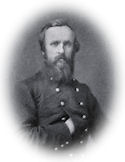
August 7, Wednesday.—Another bright, warm day. With Adjutant Fisher pistol shooting this A. M. Tolerably good firing. Last night a picket shot through the hand; said he fired twice at his assailant; doubted. Supposed to be an accidental wounding. Letters from Ohio.
August 2011
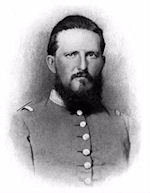
Centreville, August 7, 1861.
I have received from Gen. Jackson the appointment to act as his aid, and wish you to send my uniform coat and pants by Rollin, Kahle or some one of our men, whichever comes first. Switzer is just leaving, and I have not time to write more.
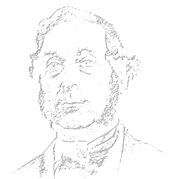
AUGUST 7TH.—Saw Col. Pendleton to-day, but it was not the first time. I have seen him in the pulpit, and heard him preach good sermons. He is an Episcopal minister. He it was that plowed such destruction through the ranks of the invaders at Manassas. At first the battery did no execution; perceiving this, he sighted the guns himself and fixed the range. Then exclaiming, “Fire, boys! and may God have mercy on their guilty souls!” he beheld the lanes made through the regiments of the enemy. Since then be has been made a colonel, and will some day be a general; for he was a fellow-cadet at West Point with the President and Bishop Polk.
A tremendous excitement! The New York Herald has been received, containing a pretty accurate list of our military forces in the different camps of the Confederate States, with names and grades of the general officers. The Secretary told me that if he had required such a list, a more correct one could not have been furnished him. Who is the traitor? Is he in the Adjutant-General’s office? Many suppose so; and some accuse Gen. Cooper, simply because he is a Northern man by birth. But the same information might be supplied by the Quartermaster’s or Commissary-General’s office; and perhaps by the Ordnance Bureau; for all these must necessarily be in communication with the different organizations in the field. Congress was about to order an investigation; but it is understood the department suggested that the matter could be best searched into by the Executive. For my part, I have no doubt there are many Federal spies in the departments. Too many clerks were imported from Washington. And yet I doubt if any one in a subordinate position, without assistance from higher authority, could have prepared the list published in the Herald
August 7. — John C. Breckinridge was serenaded at a hotel in Baltimore, and in response essayed to address those assembled in the street, but was compelled to desist by the uproar of the crowd, who shouted for the “Union,” “Crittenden,” “Scott,” etc. — Baltimore American, August 9.
— Gen. Magruder, C. S. A., with a force of 7,000 men, including 200 cavalry and eight pieces of artillery, viz., three Parrott guns, four howitzers, and one rifled cannon, took up a position on Back River, three miles from Hampton, Virginia. The intention was to draw out the national forces, attack Camp Hamilton or Newport News if practicable, and at least to destroy Hampton, so as to prevent its use by the U. S. troops for winter-quarters. Gen. Butler at once repaired to Hampton Bridge, where he remained until 11 o’clock P. M. Col. Weber erected a barricade near the Hampton end of the bridge, and placed a strong guard at various points near.
A few minutes past midnight, Gen. Magruder, with about 500 Confederates—some of them belonging in Hampton—entered the town, and immediately fired the buildings with torches. A greater part of the five hundred houses were built of wood, and no rain having fallen lately, the strong south wind soon produced a terrible conflagration. There were perhaps twenty white people and double that number of negroes remaining in the town from inability to move, some of whose houses were fired without waking the inmates. They gave Gary Jones and his wife, both of them aged and infirm, but fifteen minutes to remove a few articles of furniture to the garden. Several of the whites and also of the negroes were hurried away to be pressed into the Confederate service. Mr. Scofleld, a merchant, took refuge in a swamp above the town. Two negroes were drowned while attempting to cross the creek. A company of rebels attempted to force the passage of the bridge, but were repulsed with a loss of three killed and six wounded. They then withdrew. The fire raged all night and entirely destroyed the town.—(Doc. 168.)
—The Ohio Democratic State Convention met at Columbus to-day and nominated H. J. Jewett for Governor and John Scott Harrison for Lieutenant-Governor. A series of resolutions were adopted. The third recommends the legislatures of the States to call a National Convention for settling the present difficulties and restoring and preserving the Union. The sixth resolution condemns the President’s late attempt to suspend the writ of habeas corpus. —National Intelligencer, August 10.
—The United States gun boat Flag arrived at Fort Mifflin, on the Delaware River, this morning with thirty-six rebel prisoners, taken from the rebel war vessel, Petrel, formerly the revenue cutter Aiken, seized at Charleston last winter. The Aiken fired at the St. Lawrence, off Charleston, mistaking her for a merchant vessel, when the St. Lawrence returned a broadside, sinking the rebel. Five of the crew were lost, and the rest rescued and placed on board the Flag.—Philadelphia Press, August 8.
—Isham G. Harris, Governor of Tennessee, appeals to the people of that State “to raise, organize, and thoroughly prepare a reserve force of thirty thousand volunteers.”—(Doc. 169.)
——-
Late addition to Volume 3:
August 7.—In the C. S. Congress, a bill was reported favorably from the Military Committee to increase the military force of the Confederacy to the extent of four hundred thousand men.—Richmond Enquirer, August 9.
August 6.—Warm, beautiful weather. A busy day, settling disputes between citizens and their quarrels. I held a sort of police court. Dr. Joe also decided cases. The parties under arrest, we hear their stories and discharge or put on bread and water as the case seems to require. All local tribunals suppressed or discontinued. We also are full of courier and express duty. Colonel Withers, a Union citizen of the old-fashioned Intelligencer reading sort, called. He is a true patriot. We sent out a courier to meet Colonel Ammen with the Twenty-fourth, preparatory to greeting and escorting him. But he isn’t coming yet. Colonel Scammon is policing and disciplining in a good way. The colonel improves. As soon as taps sounds he has the lights put out and all talk suppressed.
When we came to Weston, Colonel Lytle was here with four companies. The Seventeenth returning home (three-months men) passed through here about the second or third. The Nineteenth about the first. Colonel E. B. Tyler with the Seventh is beyond Sutton. Colonel Bosley with the Sixth is at Beverly.
_______
WESTON, VIRGINIA, Tuesday P. M., August 6, 1861.
DEAR MOTHER:—I have just read your letter, with Brother William’s of the 2nd,—the first I have had from anybody since we came to Virginia. I am sitting in my tent looking out on the same beautiful scene I have so often referred to. It is a bright and very warm afternoon, but a clear, healthful mountain air which it is a happiness to breathe. . . .
My horse shows a little weakness in the fore shoulders, but as he can probably work well in an ambulance, I can exchange him for a good government horse, if he gets worse. We have plenty of business. A good deal of it is a sort of law business. As all civil authority is at an end, it is our duty to keep the peace and do justice between the citizens, who, in these irregular times, are perhaps a little more pugnacious than usual. Dr. Joe and I, under direction of the colonel, held courts on divers cases all the forenoon. It was rather amusing, and I think we dispensed very exact justice. As there is no appeal, a case decided is for good and all.
I am so glad you and Uncle are both getting well. If Uncle wishes to travel, and we remain here, he couldn’t please himself better than by a trip this way. He would enjoy a few days very much in our camp, or at the hotel in the village.
Young Jewett leaves with his father for Zanesville tonight. I hope he will stand the trip well. I will hand them this letter to mail when they get out of these woods. Send me sometime a neat little New Testament. I have nothing of the sort. I have clothes enough. I am cut short by business. Good-bye.
Affectionately,
R. B. HAYES.
MRS. SOPHIA HAYES.
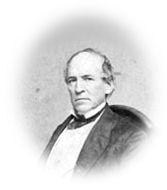
TUESDAY 6
M. at 92. at 10. this morning with but little air stirring. The Lincoln boys were both up here after mine by 9 o’clock, they make themselves quite at home in the house. Packed up my books at the Pat office today, shall try to get out some Patents on my own ac[coun]t. Saw the Comr again, cannot move him yet. He showed me the act current [?] for July, deficit $8000. Walked down to the Camp with Julia, saw the officers, returned about 9 o’clock.

______
The three diary manuscript volumes, Washington during the Civil War: The Diary of Horatio Nelson Taft, 1861-1865, are available online at The Library of Congress.
AUGUST 6TH.—Custis arrived and entered upon the discharge of his duties.
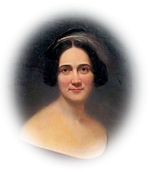
Tuesday.—The North requires 600,000 men to invade us. Truly we are a formidable power! The Herald says it is useless to move with a man less than that. England has made it all up with them, or rather, she will not break with them. Jerome Napoleon is in Washington and not our friend.
Doctor Gibbes is a bird of ill omen. To-day he tells me eight of our men have died at the Charlottesville Hospital. It seems sickness is more redoubtable in an army than the enemy’s guns. There are 1,100 there hors de combat, and typhoid fever is with them. They want money, clothes, and nurses. So, as I am writing, right and left the letters fly, calling for help from the sister societies at home. Good and patriotic women at home are easily stirred to their work.
Mary Hammy has many strings to her bow—a fiancé in the army, and Doctor Berrien in town. To-day she drove out with Major Smith and Colonel Hood. Yesterday, Custis Lee was here. She is a prudent little puss and needs no good advice, if I were one to give it.
Lawrence does all our shopping. All his master’s money has been in his hands until now. I thought it injudicious when gold is at such a premium to leave it lying loose in the tray of a trunk. So I have sewed it up in a belt, which I can wear upon an emergency. The cloth is wadded and my diamonds are there, too. It has strong strings, and can be tied under my hoops about my waist if the worst comes to the worst, as the saying is. Lawrence wears the same bronze mask. No sign of anything he may feel or think of my latest fancy. Only, I know he asks for twice as much money now when he goes to buy things.
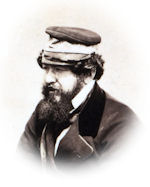
August 6th.—Prince Napoleon, anxious to visit the battle-field at Bull Run, has, to Mr. Seward’s discomfiture, applied for passes, and arrangements are being made to escort him as far as the Confederate lines. This is a recognition of the Confederates, as a belligerent power, which is by no means agreeable to the authorities. I drove down to the Senate, where the proceedings were very uninteresting, although Congress was on the eve of adjournment, and returning visited Mr. Seward, Mr. Bates, Mr. Cameron, Mr. Blair, and left cards for Mr. Brekinridge. The old woman who opened the door at the house where the latter lodged said, “Massa Brekinridge pack up all his boxes; I s’pose he not cum back here again.”
August 6.—All the bills which passed both Houses of the Congress of the United States, were approved by President Lincoln, who yielded a reluctant approval of that for the confiscation of property used for rebellious purposes.— (Doc. 159.)
—The brigs Naiad, Machias, and Ben Dunning, seized by the privateer steamer Sumter, near Cienfuegos, arrived at New York. They were released by order of the Spanish Government, and sailed with others as far as Cape Antonio, under convoy of the U. S. steamer Crusader.—Official advices from the Gulf squadron state that, on the 4th of July off Galveston, the United States steamer South Carolina captured six schooners; on the 5th, two, and ran one ashore; on the 6th, one, and on the 7th, one—making in all eleven sail destroyed or captured. The names of the captured vessels are the Shark, Venus, Ann Ryan, McCaulfield, Louisa, Dart, Covalia, Falcon, George Baker, and Sam. Houston. A portion of them had cargoes, chiefly of lumber. Among other things captured were 13 mail bags, and 31 bags containing express matter. — N. Y. Times, August 7.
— Queen Victoria, in her speech to the British Parliament this day, said: — “The dissensions which arose some months ago in the United States of North America, have unfortunately assumed the character of open war. Her Majesty, deeply lamenting this calamitous result, has determined, in common with the other powers of Europe, to preserve a strict neutrality between the contending parties. — London News, August 7.
— There was great excitement in the House of Representatives at Washington this morning. The near approach of the hour of adjourning, and the busy and exciting scenes which always attend the adjournment, attracted quite a crowd of ladies and gentlemen to the galleries. The Senate went into executive session at an early hour, and thus sent their spectators into the galleries of the House of Representatives. Within a few minutes of the hour of adjournment, a most exciting scene took place in the House. A lull had occurred in the business, when Mr. Wickliffe, of Kentucky, arose and stated to the House that the elections in his State had gone largely for the Constitution, and that the people of Kentucky had declared that their State, among the first in the Union, should be among the last in the Union. The announcement created a scene of indescribable enthusiasm. Cheer after cheer arose from the floor and galleries, and the Speaker, unable to control the assembly, yielded to the general enthusiasm of the moment. — Phila. Press, August 7.


